By Dr. Matthew Loux and Bryce Loux | 01/27/2026
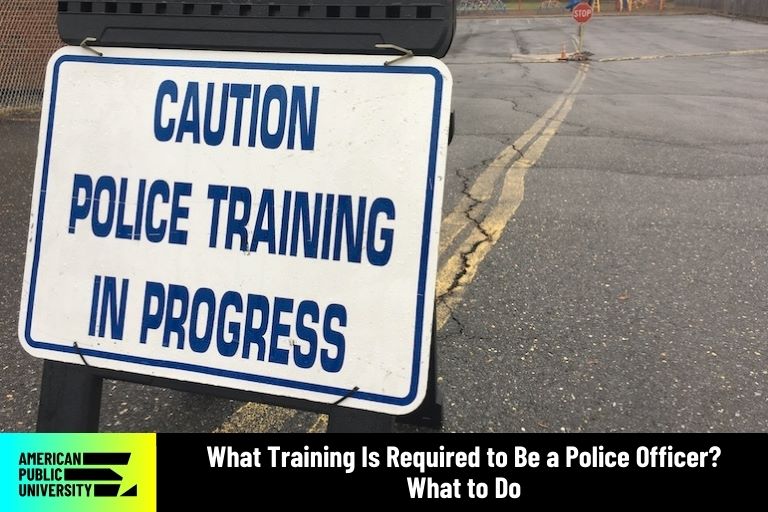
Becoming a police officer in the United States is a rigorous, multi-step process with high standards. It is designed to ensure candidates are:
- Physically prepared for the field demands of modern law enforcement
- Mentally resilient
- Knowledgeable of the law
- Grounded in strong ethical standards
Police officers can apprehend, arrest, and use force on others when necessary. Because of the demands of this profession, police officers undergo extensive training that continues throughout their careers.
Police Training Standards
Unlike other countries that operate centralized national police forces, America has a highly decentralized law enforcement system. This system comprises more than 17,600 individual police departments.
Police training standards are established through state laws and Peace Officer Standards and Training (POST) requirements. In addition, law enforcement agencies across the country supplement those standards with additional training policies.
Police Officer Basic Requirements
Police officer candidates complete their training in multiple phases. They progress through a clearly defined, step-by-step structure to prepare them to serve as sworn peace officers.
All applicants must meet a basic set of requirements and pass a stringent selection process. However, the standards might differ from one police department to another.
Minimum Eligibility Requirements
Police departments in the United States maintain minimum requirements that vary by jurisdiction:
- Candidates’ minimum age is typically 21, although some agencies allow younger applicants with restrictions
- U.S. citizen or a legal resident
- High school diploma or GED (college-level work is preferred)
- A valid driver’s license
- No felony convictions and no disqualifying criminal history
- Good moral character
Some police agencies prefer applicants with a military service background, a higher level of education, or the ability to speak more than one language. Some agencies may prefer candidates who have a law enforcement degree, a military background, or the ability to speak a second language, which is useful in first responder situations.
Physical Fitness Test
While applying for police work, physical readiness is paramount. Some police agencies will want applicants to successfully pass a fitness test. Such tests entail:
- Timed runs (sometimes 1.5 miles)
- Push-ups and sit-ups
- Obstacle/agility test
- Grip strength and/or vertical jump tests
Background Investigation
Background checks are some of the most time-consuming and crucial aspects of the hiring process. The eligibility criteria involve the applicant’s:
- Criminal and driving history
- Employment history
- Academic records
- Credit history and financial records
- Social media posts
Family members, neighbors, and coworkers may also be interviewed as a way to assess a police officer candidate.
Psychological and Medical Screening
Psychological and medical screening includes:
- A psychological evaluation
- A medical exam, including a vision, hearing, and cardiovascular assessment
- A drug screening
These tests help determine whether candidates can handle the pressure, ethical obligations, and physical danger that come with policing.
Police Academy Training
Once candidates pass all the assessments and are hired conditionally, they attend a police academy for further training. Police training academies are typically run by police departments, state agencies, or regional training centers.
Academy Life and Daily Expectations
Police training academies are intense, both physically and mentally. Most academies function within a paramilitary framework, especially in the first weeks.
Recruits are put into strict schedules, and uniform inspections happen regularly. High expectations are set regarding discipline, promptness, and professionalism. Physical training, classroom lessons, and scenario drills are part of the schedule.
Educational Requirements for Officer Candidates
College degrees are not required from police officer candidates, but higher levels of education from an accredited institution are valued in policing. However, a college degree can provide useful knowledge and skills when a candidate seeks a more elevated role later, after being hired by the police department.
A degree in criminal justice, psychology, sociology, and other related studies offers a valuable knowledge of:
- Law and ethics
- Human behavior
- Community relations
- Research and writing skills
Education does not replace training at the academy but rather supplements it.
Core Components of Academy Training
Academy training is designed to provide aspiring peace officers with the knowledge and skills they’ll need in the field. It includes not only physical training, but also:
- Criminal law and legal procedures
- Use of force and defensive tactics training
- Departmental use of force policies
- Firearms training
- Emergency vehicle operations
- First aid and medical response training
- Communication and interpersonal skills
- Report writing and documentation
- Scenario-based training
- Ethics, integrity, and accountability training
Criminal Law and Legal Procedures
Legal instruction forms the foundation of police training. Recruits learn to apply federal law constitutional principles in real-world situations, including:
- Federal law, with emphasis on the Fourth, Fifth, Sixth, and Fourteenth Amendments
- Criminal statutes and the classification of crimes
- Powers of arrest and the establishment of probable cause
- Rules governing search and seizure
- Civil liability and the principles of constitutional policing
Use of Force and Defensive Tactics Training
Training is provided to recruits to ensure they understand that the use of force must be reasonable and legally justified. This use of force and defensive tactics training includes:
- Use of force decision-making models
- Empty-hand control techniques
- Defensive tactics and takedowns
- Batons and other less lethal instruments like pepper spray or tasers
Before recruits are issued a firearm for active duty, they must meet certain standards and demonstrate safe use of a firearm while on the range.
Firearms Training
Most recruits are armed, because a firearms training program is an integral part of the police academy. Firearms training includes:
- Firearm safety and maintenance
- Fundamentals of marksmanship
- Judgment in situational shooting
- Shooting under stress and low-light situations
Emergency Vehicle Operations
Driving training prepares recruits on how to safely drive patrol vehicles during both normal and emergency situations, including:
- Defensive driving
- Emergency response driving
- Vehicle control and pursuit policies
- Collision avoidance
First Aid and Medical Response Training
Police officers can often be the first to arrive at medical emergencies. During training, the academy includes instruction on:
- Cardiopulmonary resuscitation (CPR) and automated external defibrillator (AED) certification
- Basic first aid
- Trauma care and bleeding control
- Naloxone administration and overdose response
Communication and Interpersonal Skills
Communication is one of the most critical tools an officer has at their disposal. Recruits are trained in:
- Verbal de-escalation
- Conflict resolution
- Witness and victim interviewing
- Professionalism and cultural sensitivity, including cultural diversity
- Radio communications
Strong communication skills improve officer safety and also enhance community policing.
Report Writing and Documentation
Police reports that document facts and evidence can make or break a case in court. Police recruits must learn to write clearly, accurately, and objectively when creating:
- Incident and arrest reports
- Use-of-force reports
- Probable cause statements
Scenario-Based Training
Candidates are also trained in scenario-based exercises that replicate real-life situations and challenges, such as:
- Domestic violence calls
- Traffic stops
- Mental health crises
- Active threat situations
Ethics, Integrity, and Accountability Training
Ethics and integrity training is one of the most important parts of any police academy. Recruits learn that the police can only use their power if they have the community’s trust.
Ethics training centers around:
- Ethical conduct and decision making
- Abuse of authority
- Duty to intervene
- Anti-corruption
- Whistleblower laws
Recruits also learn how internal accountability systems, such as internal investigations by an agency, civilian complaints, and discipline.
Educational Requirements
College degrees are not required from police officer candidates, but higher levels of education are valued in policing. However, a college degree can provide useful knowledge and skills when a candidate seeks a more elevated role later, after being hired by the police department.
Field Training Officer Program
After graduating from a police academic, aspiring officers must enter a field training officer (FTO) program for their final training.
During field training, candidates in the program are each partnered with veteran officers who they will work with for an entire patrol shift. For the FTO, these veteran officers will:
- Observe and evaluate performance
- Offer coaching or feedback
- Increase responsibilities gradually
- Supervise and train recruits to incorporate their real-world exercises along with the knowledge gained from the academy
Each officer spends around 8 to 16 weeks in the FTO program, but this time can be extended if necessary. Each officer is closely monitored, and their performance is documented every day.
The Probationary Period
Once officers complete field training, they begin a probationary period that usually lasts from six to 12 months. During this time, officers:
- Are allowed to work alone but are still under close supervision
- See evaluations of their work, which are completed at regular intervals
- Are less likely to be terminated because they have already passed rigorous tests
After successful completion of the probationary period, officers then receive their full permanent status.
Continuing Education and Training Is Essential
Officer training is a continuous process that does not end once an officer completes the probationary period. Officers will always be required to complete mandatory training throughout their careers.
Most U.S. states require that police officers complete recurrent training in these areas:
- The use of firearms
- Law updates
- Use of force policies
- Ethical policies and professional conduct
- Emergency driving techniques
- First aid and CPR
Specialized Training Opportunities
Officers with more experience, training, additional education, and certifications may have the chance to pursue specialized positions in:
- Criminal investigation or detective units
- K-9 units
- SWAT and other tactical units
- Traffic accident reconstruction
- Cybercrime and digital forensics
- School security
New Police Training Methods
Police training methods across the United States have experienced several significant changes, involving areas such as:
- Mental health concerns and training
- De-escalation strategies
- The health and wellness of officers
Being a Law Enforcement Officer Is the Chance to Make a Difference
Completing the full scope of training required to become a police officer is essential for anyone entering law enforcement. Being a police officer is more than a job. It requires professional dedication to public service, accountability, and ongoing training. But when done well, it can make a significant difference to communities.
The Bachelor of Arts in Criminal Justice
For adult learners interested in improving their knowledge of various areas of criminal justice, American Public University (APU) provides an online Bachelor of Arts in Criminal Justice. For this bachelor’s degree, students can take courses in U.S. law enforcement, criminal investigation, constitutional law, and criminal law. Other courses include criminology, corrections and incarceration, and the criminal legal process.
For more information, visit APU’s security and global studies degree program page.
Note: This degree program is not designed to meet the educational requirements for professional licensure or certification in any country, state, province or other jurisdiction. This program has not been approved by any state professional licensing body and does not lead to any state-issued professional licensure.
Dr. Matthew Loux is a criminal justice faculty member for the School of Security and Global Studies at American Public University. He holds a bachelor’s degree in criminal justice and a master’s degree in criminal justice administration from the University of Central Missouri State, a doctoral degree in management from Colorado Technical University, and a Ph.D. in educational leadership and administration from Aspen University.
Dr. Loux has been in law enforcement for more than 30 years. He has a background in fraud and criminal investigation, as well as hospital, school, and network security. Dr. Loux has researched and studied law enforcement and security best practices for the past 10 years.
Bryce Loux is an alumnus of American Public University. He holds a bachelor’s degree in fire science with a minor in criminal justice. Bryce is currently a student success coach.